
All buyer guides · · OPINOX
Shortlist the exact resin grade, map which liquids touch each component, then expose molded tanks and assembled lids to the intended use and cleaning conditions. Treat a generic polypropylene (PP) resistance chart as a screening tool. Release the design when the assembled parts meet written checks for appearance, seating and containment.
In this guide
- Identify what each surface actually touches
- Compare grades with their molded geometry and mating parts
- Make the sample approval usable in purchasing
- Build an exposure matrix by use case
- Choose comparison samples that answer a specific question
- Review the fit after exposure and after recovery
- Resolve an unexpected result without changing several variables at once
- Document which changes reopen sign-off
- RFQ questions and answers
Identify what each surface actually touches
A tank floor may see diluted fragrance during operation, while its fill rim may see a brief splash of concentrate. A lid underside may see condensate, and the drain edge may be wiped repeatedly with the intended cleaner. Document these separately because a single immersion test misses exposure at the rim and around the lid seat.
List each liquid formulation or approved formulation range, actual dilution, temperature, contact duration and repetition. If the formulation is proprietary, ask the owner to supply coded liquid samples and their permitted use conditions. Agree who will hold the reference liquids and whether an upgraded fragrance or cleaner triggers a new trial.
Compare grades with their molded geometry and mating parts
LyondellBasell’s polypropylene guidance explains that reagent composition, temperature, applied load and molded-in stress can change resistance, and that laboratory specimens may omit real-part effects. Use grade data to choose candidates, then test the actual molded geometry. Include molded threads, clips, seal seats and molded-in markings where they exist. A material change for the tank also warrants reviewing the actual lid, seal and any other parts that contact the same liquid.
Run an unexposed reference alongside exposed samples of the same labeled grade and sample revision. Record the liquid, date, conditions and each part’s initial state. Compare distortion, cracking, whitening, swelling, staining and the ability to seat, remove and refit the lid. If a closure has a containment requirement, agree the fill level, orientation and observation period up front and record where any liquid escapes.
Make the sample approval usable in purchasing
Record the approved grade and color system, drawing revision, intended liquid range and results. Ask for a fresh review if an approval input changes, such as the resin grade, fragrance formulation or contact duration. A passed trial is meaningful when purchasing can trace what was actually tested.
- Part-by-part contact map for liquid, concentrate splashes, condensate and cleaner.
- Grade designation and mold-trial part revision for each submitted sample.
- Written acceptance for lid seating, visible changes and any containment checks.
- A reference sample and photos of the inspection areas.
Build an exposure matrix by use case
List the intended liquid, cleaner and tank exposure for each surface. A refill, residual liquid after shutdown and a wipe-down have different durations and contact zones. Record the permitted cleaning method and mark any printing or coating that it touches.
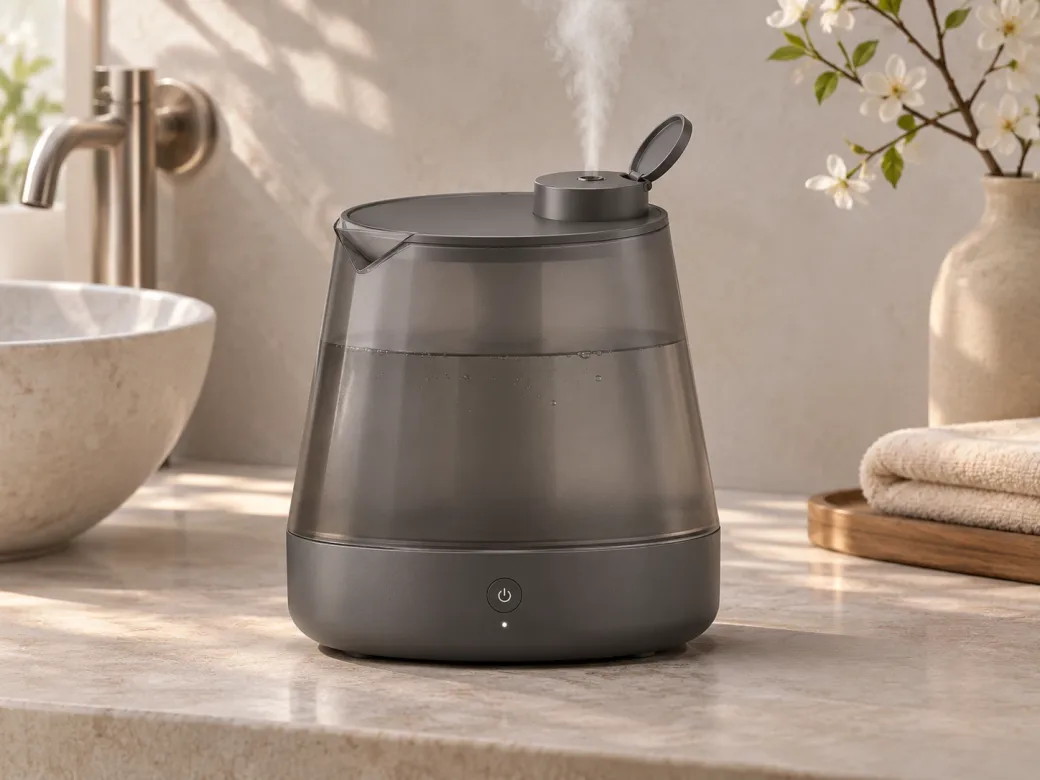
A hypothetical tabletop diffuser may use an approved fragrance diluted in water as its working liquid. A drop of concentrate can sit briefly on the rim if a person pours from a bottle, while cleaner touches both the rim and the removable lid. Assign different checks to those three interactions. For the rim, inspect visible change and whether the cover still seats. For the tank, inspect the walls and any location where a fastener or clip can leave the part under load. For the cleaned lid, check legibility of any markings and confirm the prescribed cleaning process remains practical.
Choose comparison samples that answer a specific question
Keep a flat coupon, a molded tank of the corresponding grade and as much of the actual mating assembly as you can provide. A coupon is convenient for an initial comparison between materials because its geometry is controlled. A real reservoir reveals which features concentrate load or hold liquid after draining. A complete assembly allows a separate check of the lid and seal because joint seating and compression depend on more than the tank material. Record the grade on each sample rather than relying on identical color.
Separate the first test into a control and one changed factor wherever practical. For instance, keep the liquid, test temperature and duration the same while comparing two candidate grades. After selecting a candidate, run it with both intended cleaning methods if the device will support both. If a separate color package will be used in production, include that candidate in the follow-up trial. Establish the pass criteria and scale for visible changes before the parts are exposed so the result can be compared with the control sample.
Review the fit after exposure and after recovery
Take initial photographs and note obvious cosmetic marks before exposing any samples. Where the cavity produces multiple parts, identify the cavity if that information is available. Use an inspection sketch to mark a consistent viewing or measurement location at the lid seat, screw areas and low points where liquid collects. Record whether a mark was present initially, first appeared after exposure or persisted after a defined rinse and recovery period.
Examine assembled and unassembled samples when the project involves load at the closure. For an example evaluation, a buyer might check whether the lid locks at its intended position, whether a gasket stays in its seat, and whether the closure still opens without unexpected binding. Agree on the observation method needed for each use. A tank intended to hold liquid only on a level desk has a different test profile from an assembly intended for shipping while filled. Include the latter scenario only if it is an actual product requirement.
Resolve an unexpected result without changing several variables at once
If the molded part changes but a flat plaque does not, record the location and exposure history before deciding on a solution. Compare exposed and reference samples at the same feature. Ask whether the observed mark follows a loaded fastener, a weld line, a thin transition, a fluid trap or a cosmetic finish boundary. That pattern gives the resin supplier and mold designer a starting point for follow-up. It does not establish the cause by itself.
When a result fails the agreed requirement, propose a repeat with one adjustment at a time and give each sample a new revision or test identifier. Potential actions include evaluating a different grade, changing a highly loaded joint, altering a detail that traps fluid or revising a cleaning instruction within the product’s intended use. Retest the relevant assembly once the proposed mitigation is represented by a physical sample. A written approval should identify which failed observation was resolved and how the team rechecked it.
Document which changes reopen sign-off
Grade designations, pigments, liquid recipes and assembly revisions belong in the same approval record. Note which inputs are locked and who may authorize a substitution. If a fragrance vendor introduces a new formula, compare it with the tested conditions and ask for new evidence where exposure differs. If part tooling changes change the way the cover clamps or drains, repeat the affected fit and liquid test even if the resin designation stays the same.
Keep an approval record purchasing can use: the drawing list, sample ID, exposure table, acceptance sheet and project contact. Save photos of any approved slight hue change and retain the corresponding part. Record which trial screened the resin and which signed the production assembly.
Buyer questions
Is polypropylene automatically suitable for an essential-oil reservoir?
Suitability depends on the grade, actual liquid mixture, duration, temperature and stresses in the part. Screen candidate grades and validate molded parts under the planned conditions.
Can a flat resin plaque replace a molded tank trial?
It can help compare candidates under a controlled condition. Use the assembled tank and lid for closure fit, containment and appearance checks where geometry and assembly load matter.
RFQ questions and answers
What information should I include when requesting a quote for a diffuser tank mold?
Send the current tank and lid CAD files, the drawing revisions, actual liquid and cleaning exposure ranges, preferred grade if available and the quantities expected for trials and regular ordering. Identify any mating seal and list the fit or containment checks that you want included in the proposal.
Can suppliers quote two candidate resins for the same reservoir drawing?
Ask each supplier to identify its exact grades and explain whether either alternative changes shrinkage assumptions, wall details, assembly fit or the sample plan. Request separate prices for the candidate samples and the agreed tests so the two proposals can be compared under the same assumptions.
Who supplies the fragrance and cleaner for the acceptance test?
State who ships the coded liquids, who provides handling instructions and what conditions the receiving team is expected to reproduce. If formulations are confidential, agree on sample identification and controlled handling with the formula owner. This information belongs in the quote scope and the eventual test record.
How should we compare quotes with different validation allowances?
Ask for a line item covering sample quantities, resin identification, mating parts, checks, reporting and any repeat trial. Compare the same test conditions across quotes. A tooling price may omit evaluation of real liquids, joint seating or containment if those services were never specified.
When should I request a repeat sample after a grade or formula change?
Flag the change as soon as purchasing learns about it. Share the last approved sample and exposure record, and identify which conditions or interfaces change. Ask the supplier to quote only the affected repeat checks once the responsible product team confirms the revised test scope.
Related products and services
Discuss this project with OPINOX →